
Science Vocabulary Word Worksheets
Science becomes much easier to understand when kids know what the words around them actually mean. Terms like evaporation, habitat, gravity, and ecosystem can sound complicated at first, especially when students encounter several new words in one lesson. That’s why Science Vocabulary Word Worksheets can be a helpful resource for both teachers and parents.
This science printable activity gives children a chance to see, read, spell, and use unfamiliar terms without turning vocabulary practice into a long study session. Teachers can add these pages to science lessons, while parents can use them for extra practice at home. The activities can also be adjusted to match different ages and topics, making them useful throughout the school year.
Table of Images 👆
- 8th Grade Science Vocabulary Worksheets
- 5th Grade Science Vocabulary Words
- Middle School Science Word Search
- Science Vocabulary Word List
- 8th Grade Science Vocabulary Words
- 5th Grade Science Vocabulary Words
- Elementary Science Word Practice Sheets
- Science Vocabulary Worksheets for Middle School
- Elementary Science Vocabulary Word Worksheets
- High School Science Vocabulary Word Worksheets
- Science Vocabulary Practice Sheets
- Biology Vocabulary Drill Worksheets
- Physics Term Practice Sheets
- Middle School Science Vocabulary Worksheets
 14 Images of Science Vocabulary Word Worksheets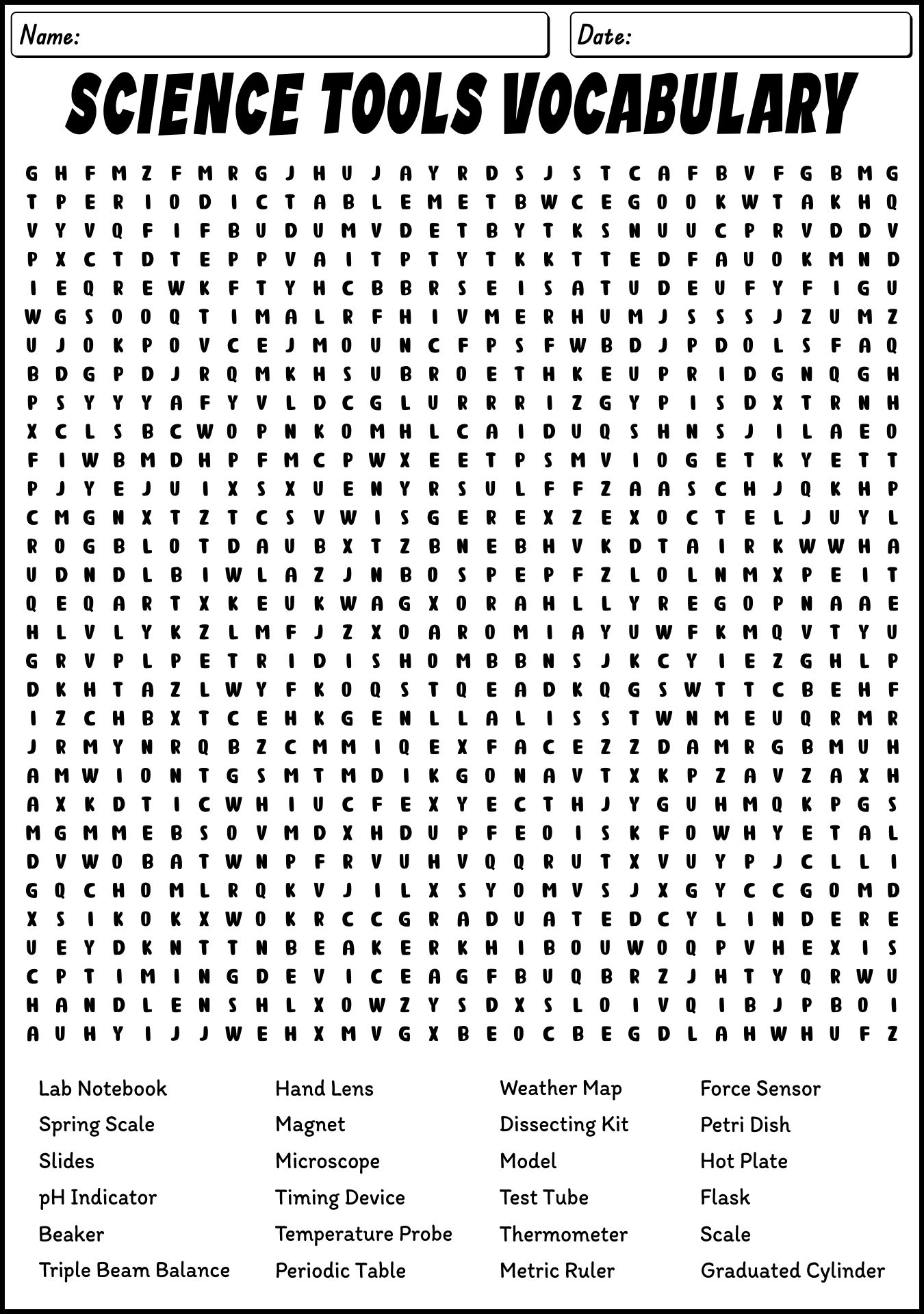
 8th Grade Science Vocabulary Worksheets
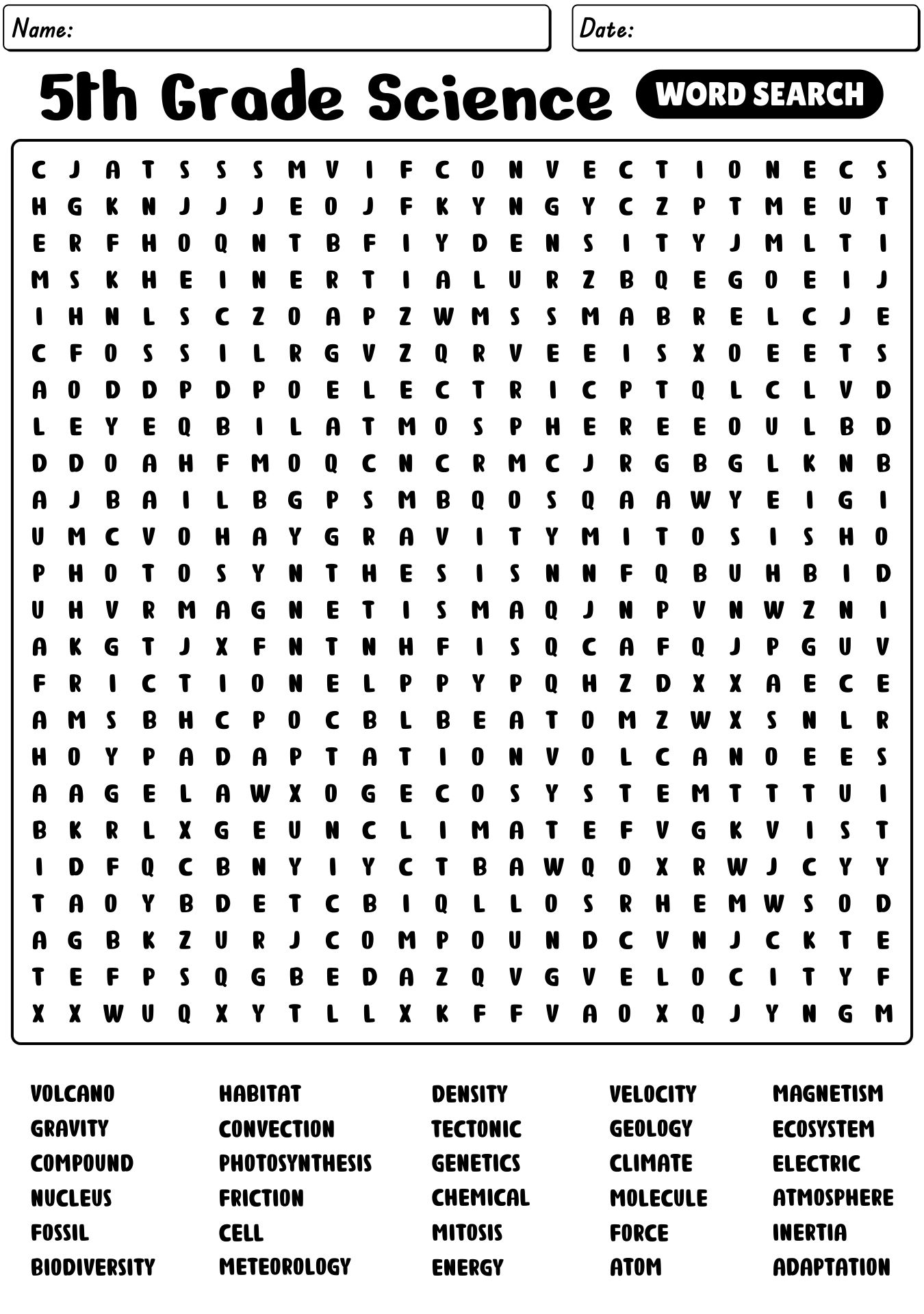
 5th Grade Science Vocabulary Words
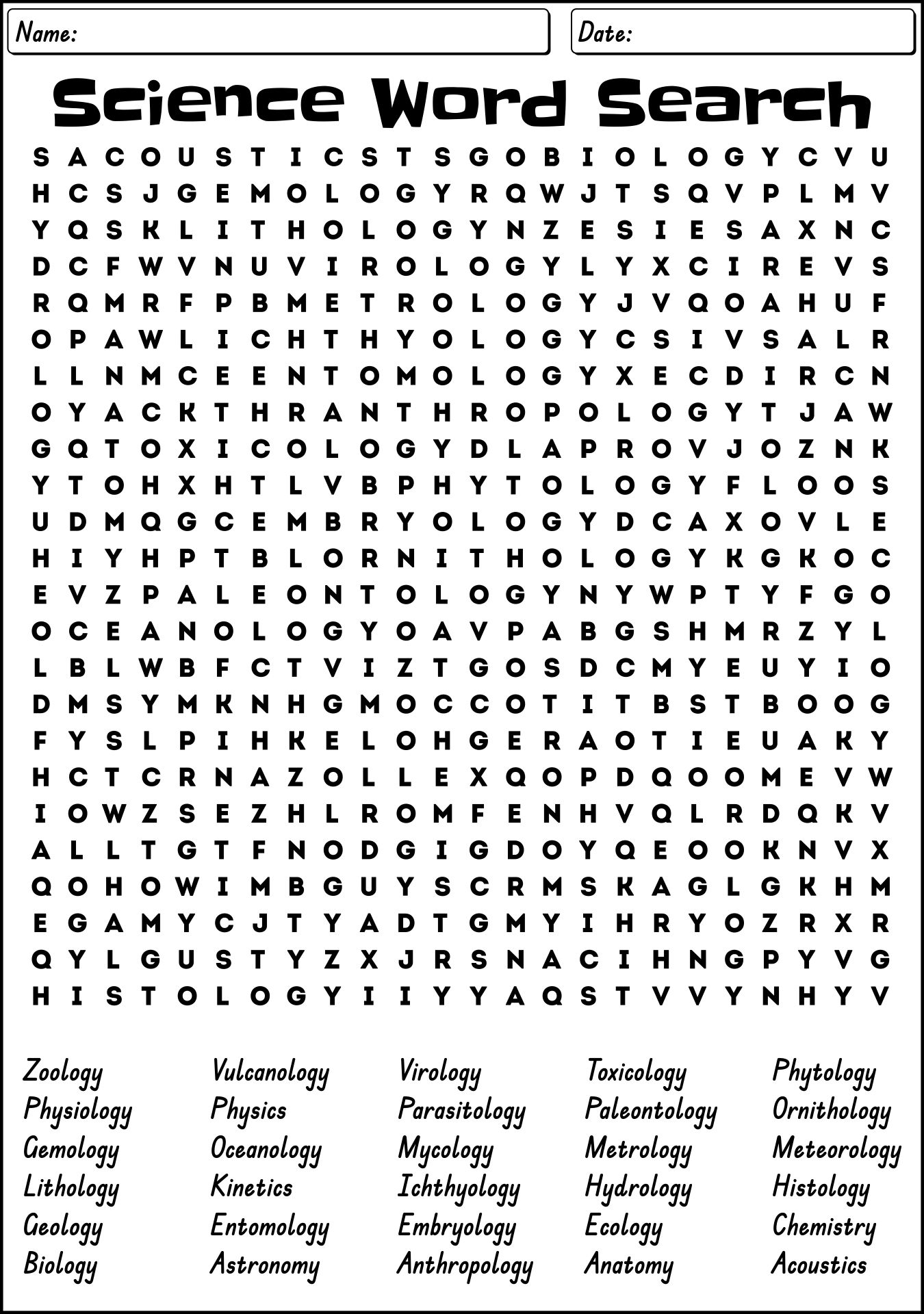
 Middle School Science Word Search
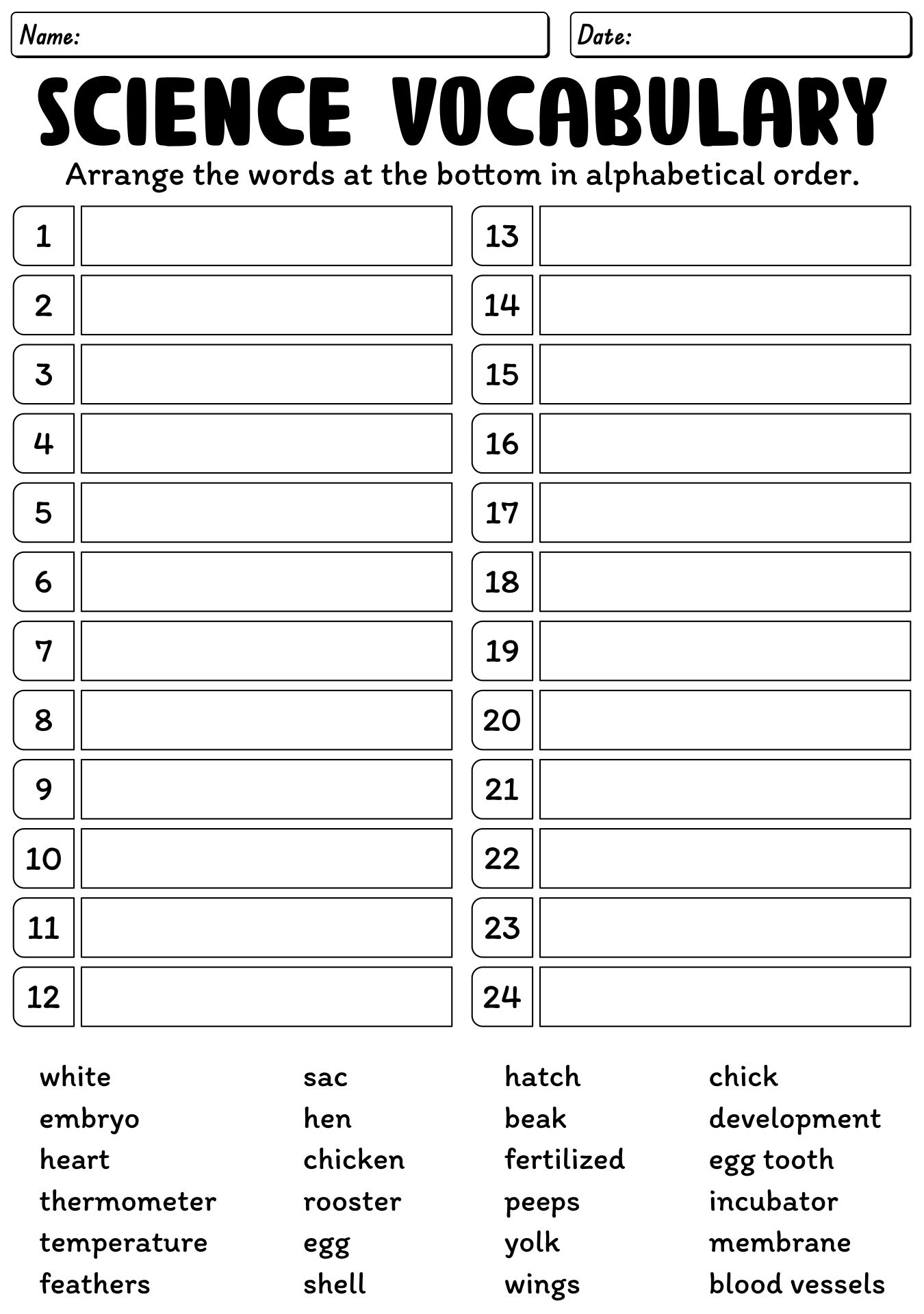
 Science Vocabulary Word List
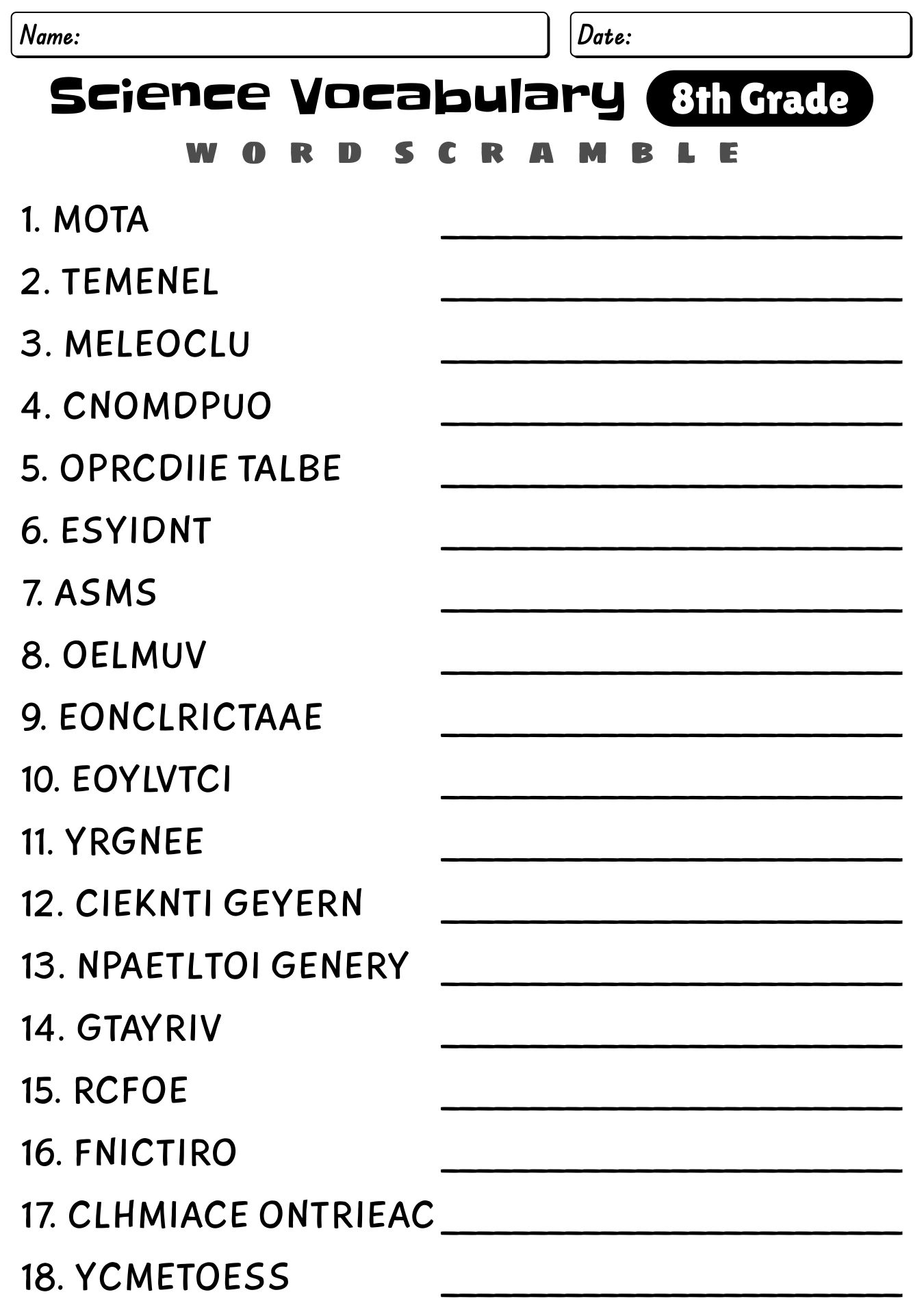
 8th Grade Science Vocabulary Words
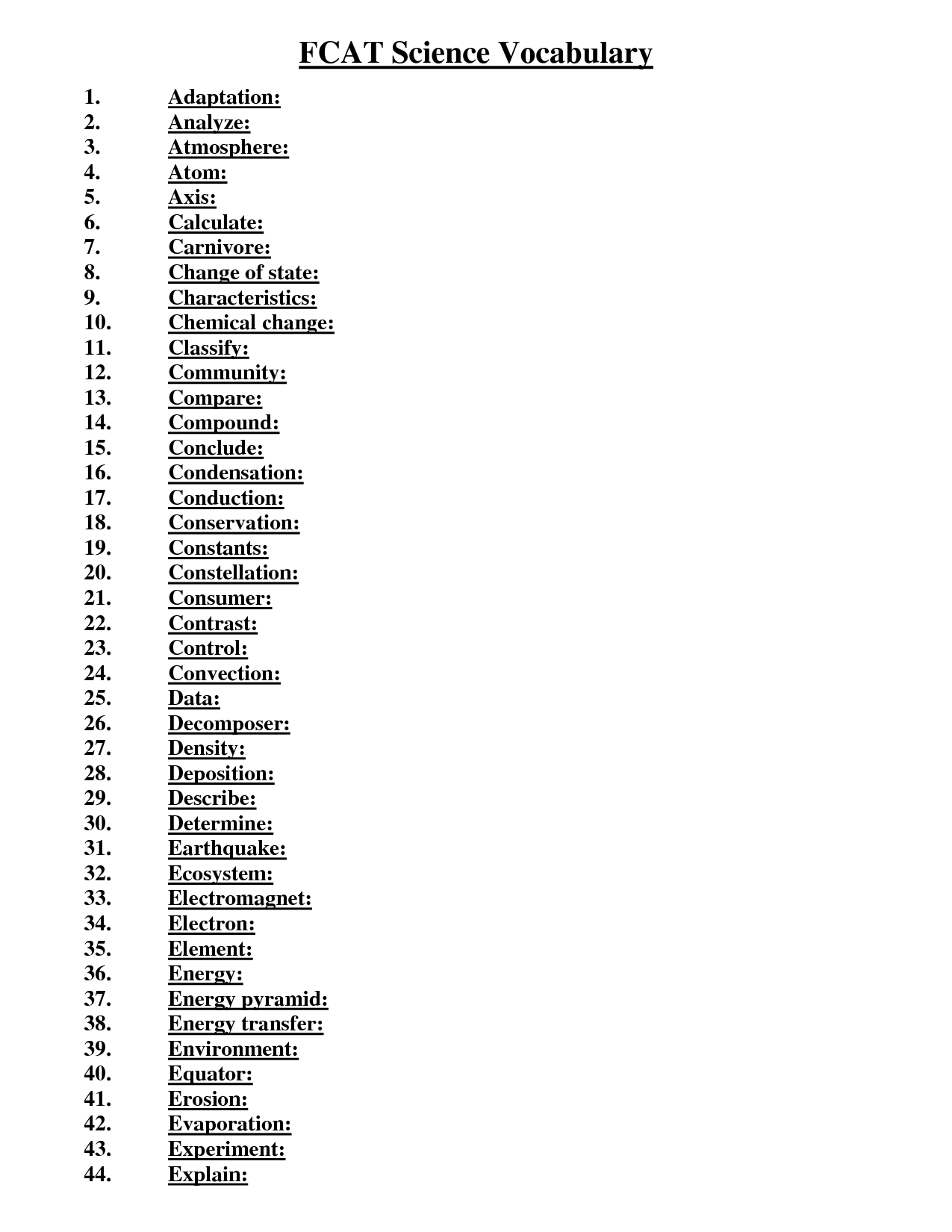
 5th Grade Science Vocabulary Words
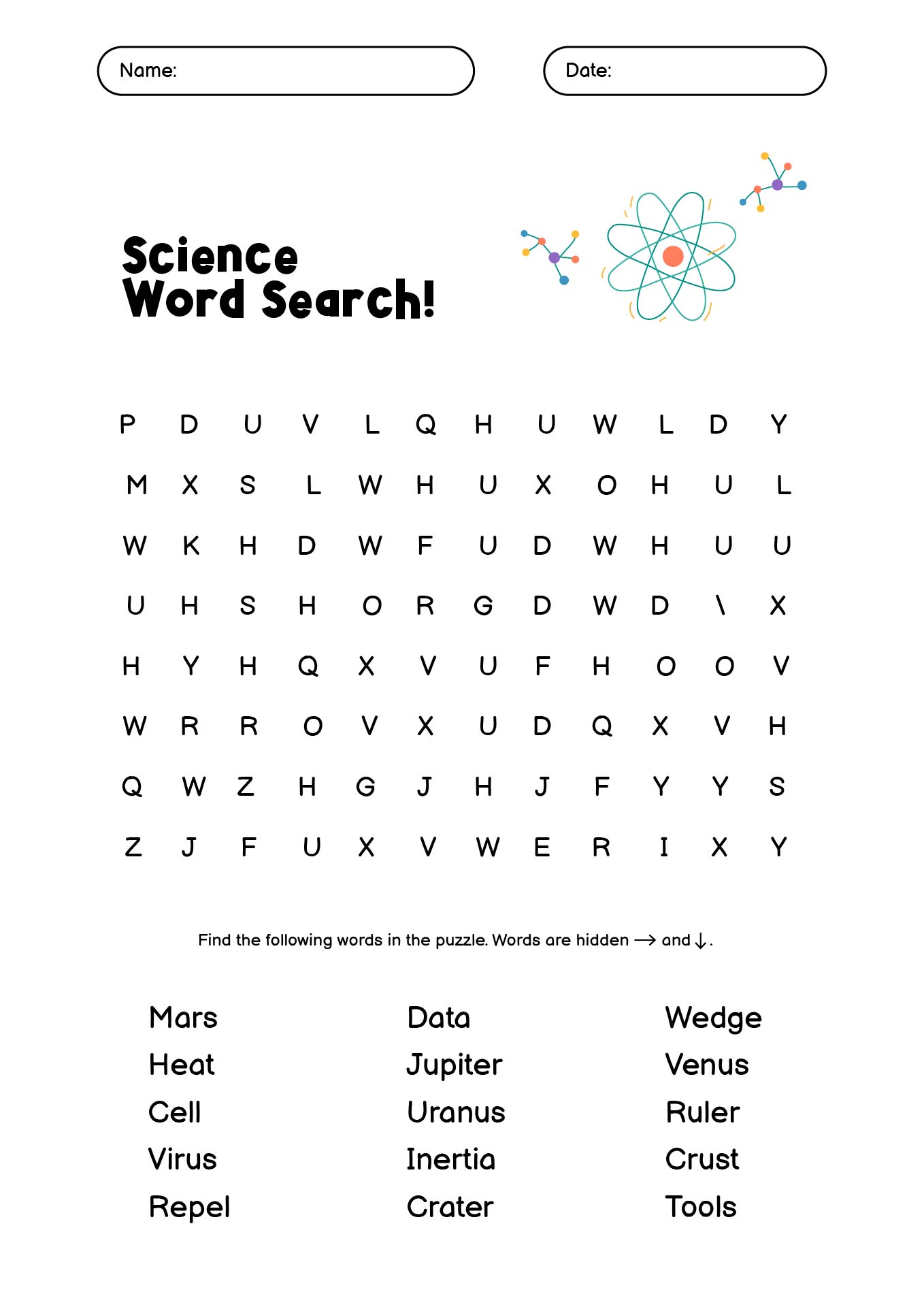
 Elementary Science Word Practice Sheets
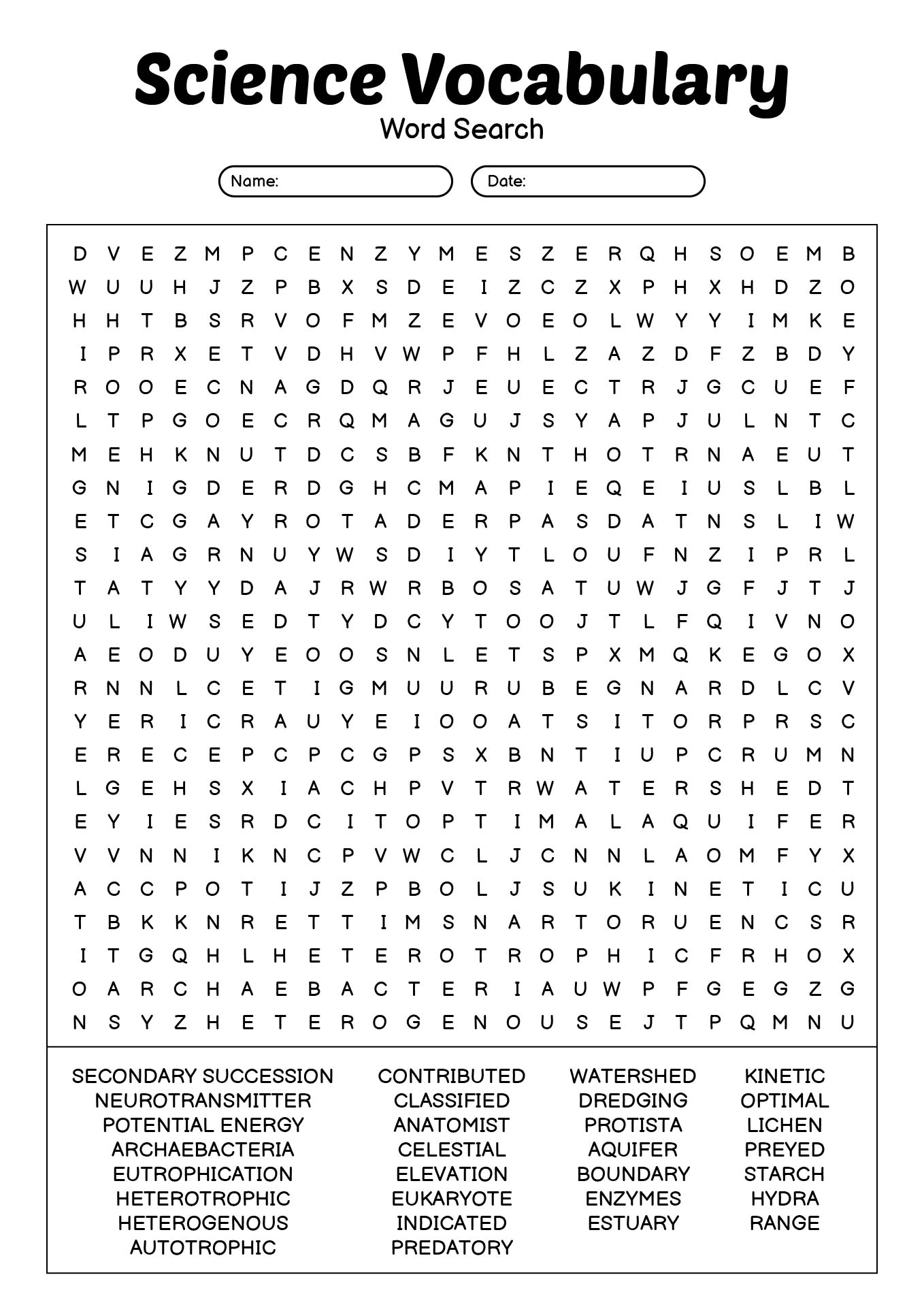
 Science Vocabulary Worksheets for Middle School
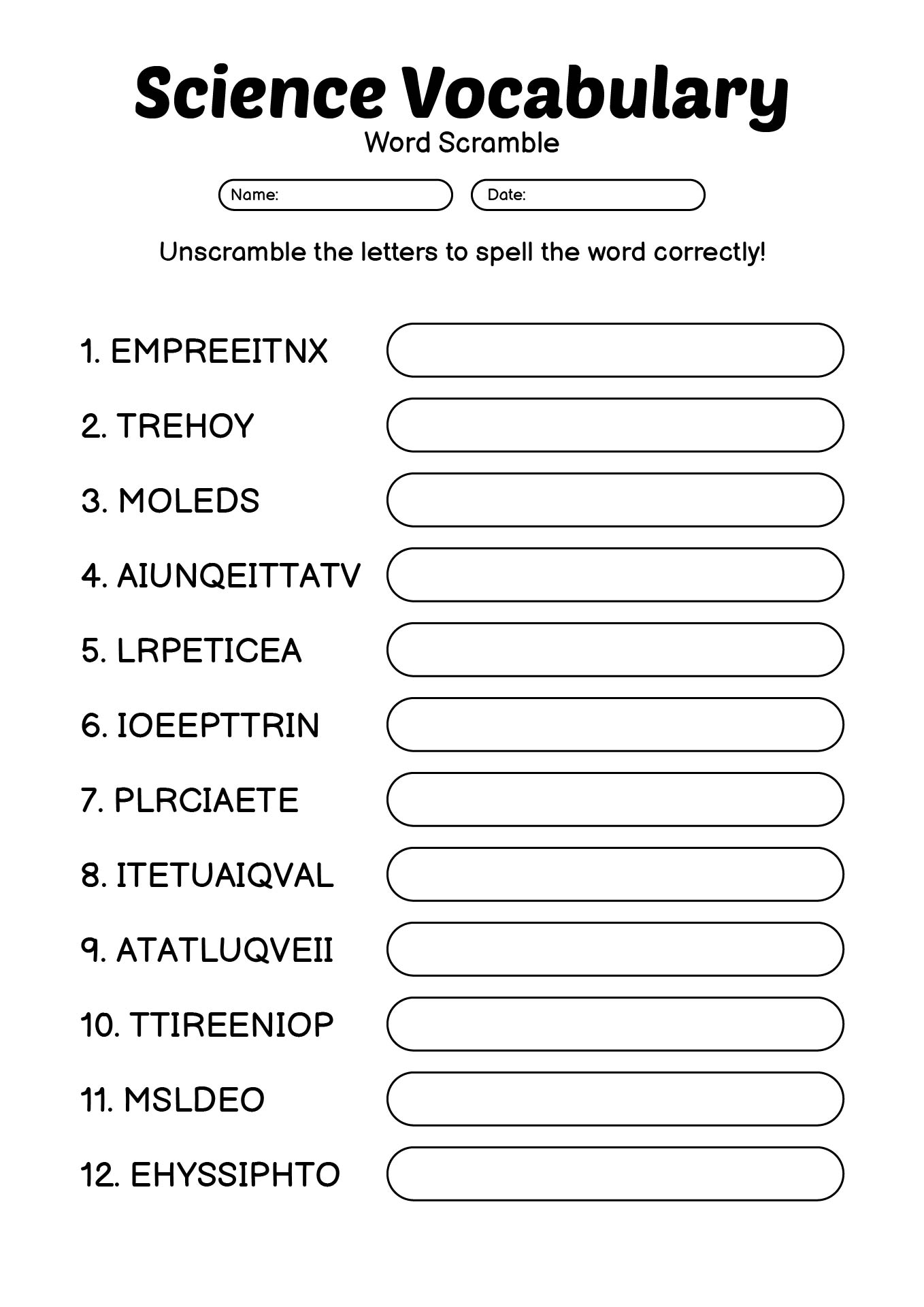
 Elementary Science Vocabulary Word Worksheets
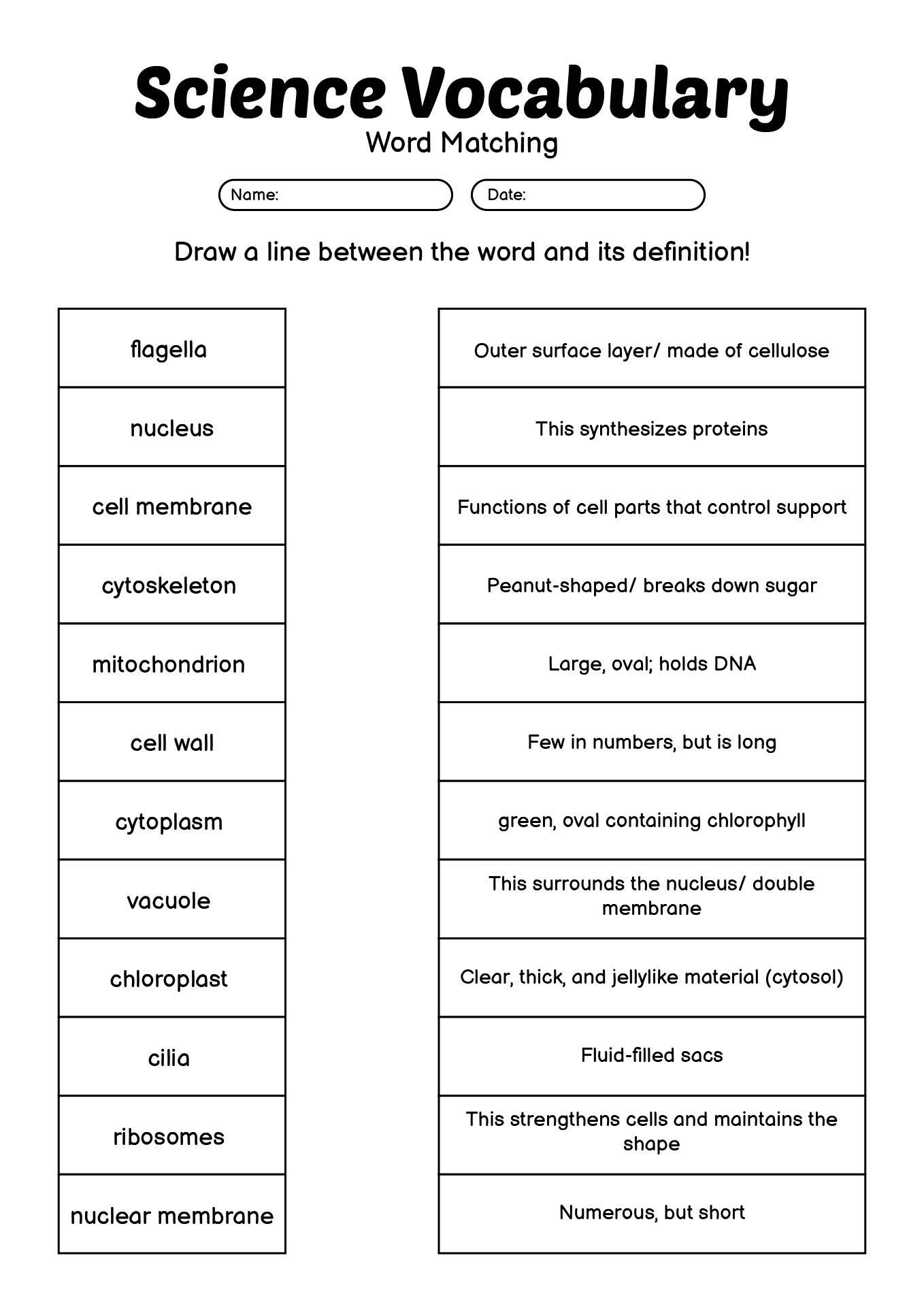
 High School Science Vocabulary Word Worksheets
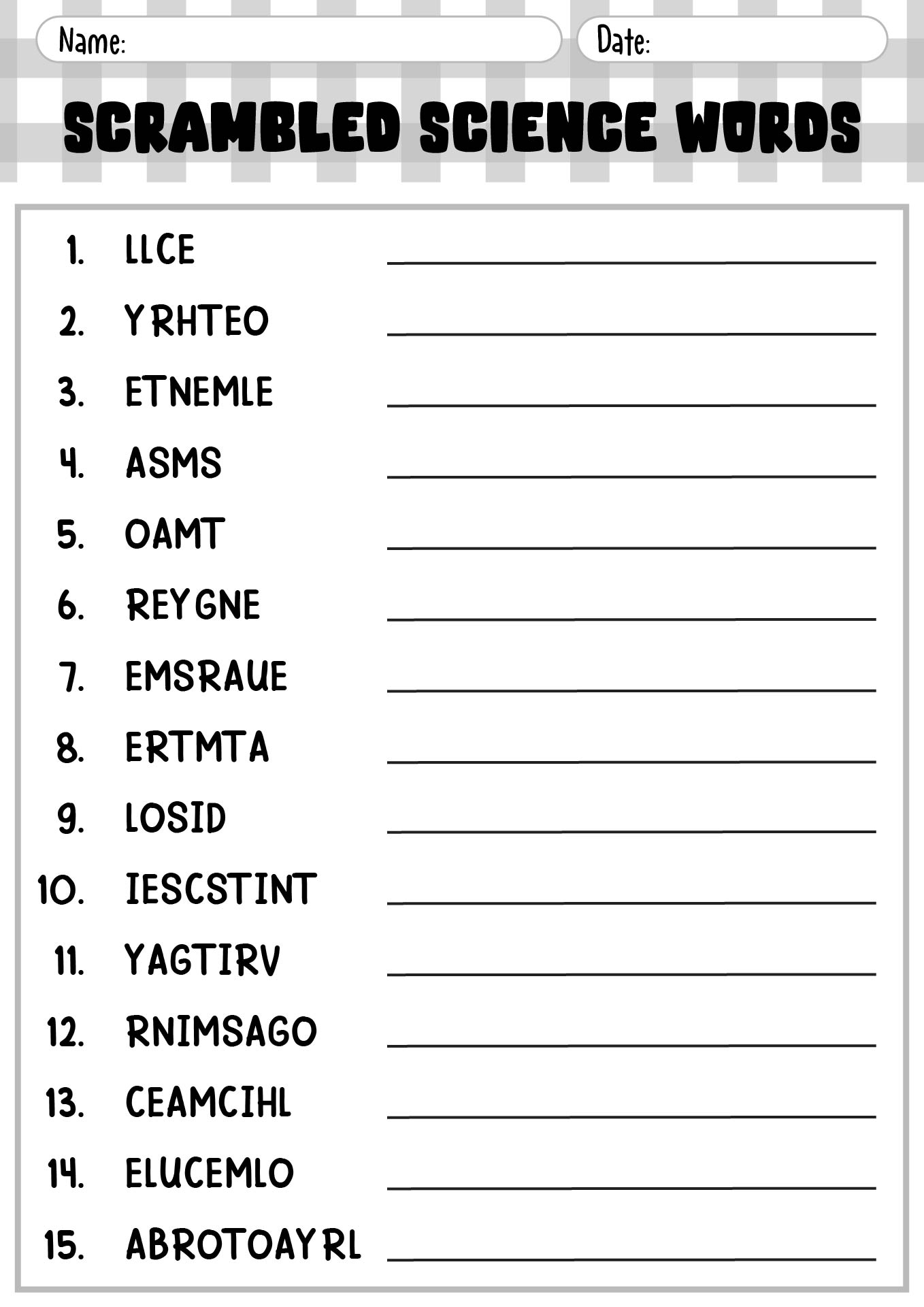
 Science Vocabulary Practice Sheets
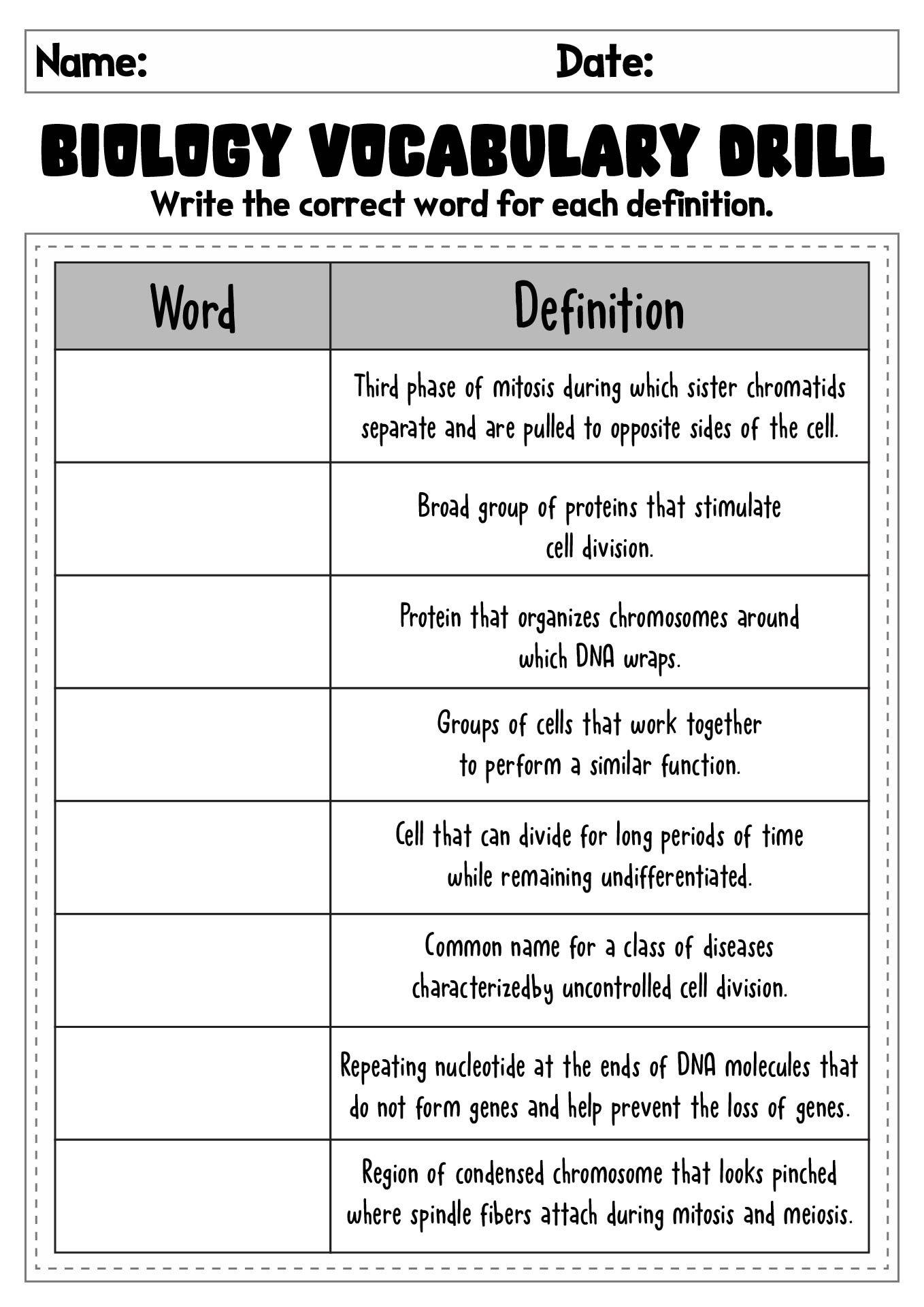
 Biology Vocabulary Drill Worksheets
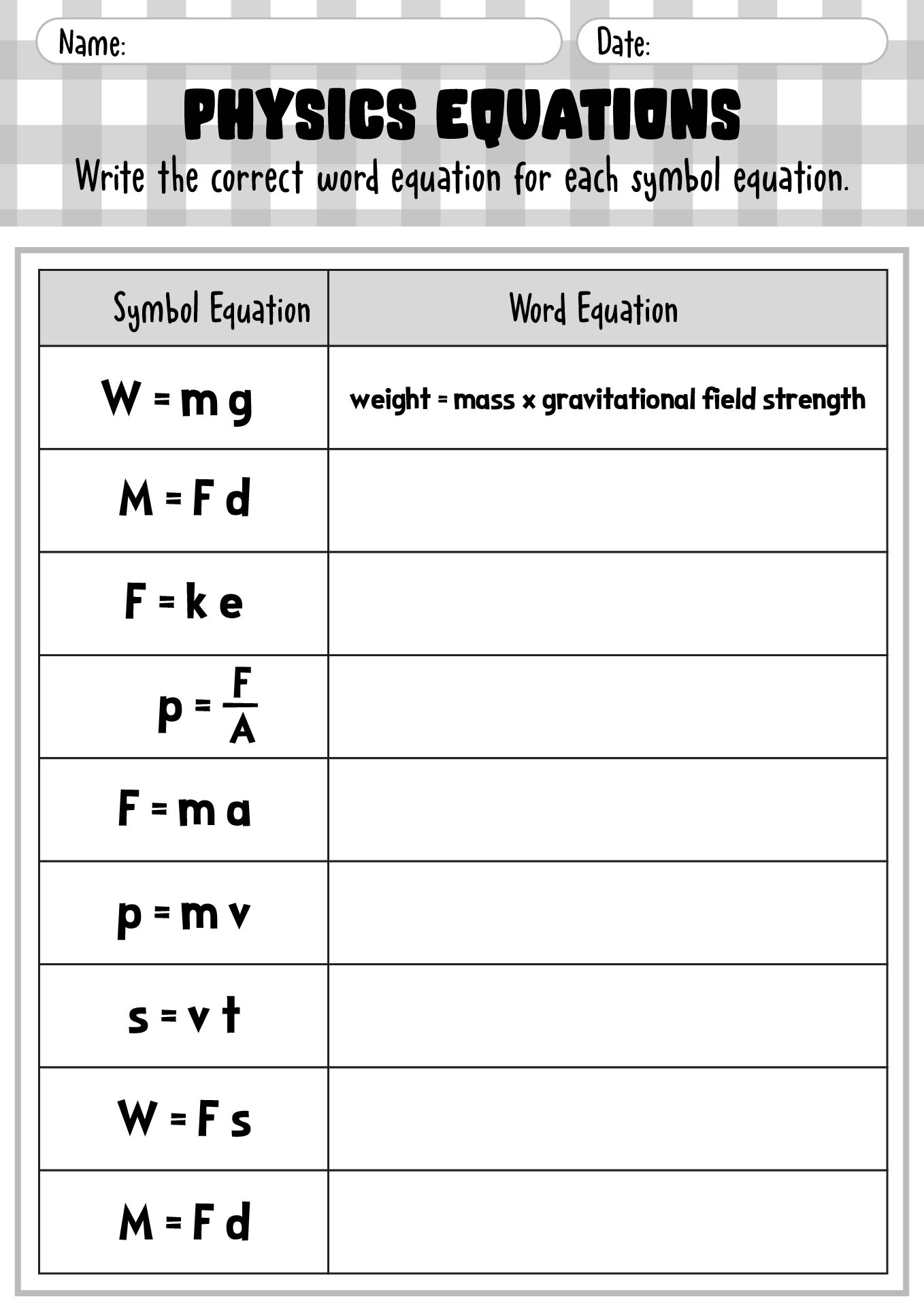
 Physics Term Practice Sheets

 Middle School Science Vocabulary Worksheets
More Worksheets
Which Grade Levels Can Use Science Vocabulary Word Worksheets?
- Early elementary students can practice simple terms related to animals, plants, weather, seasons, and the human body.
- Upper elementary students can work with words connected to ecosystems, matter, energy, life cycles, and Earth science.
- Middle school students may benefit from more specialized vocabulary related to cells, forces, chemical reactions, geology, or physical science.
- Older learners can use vocabulary practice to review technical terminology before a quiz, project, or science assessment.
Which Science Words Should Students Practice With Science Vocabulary Word Worksheets?
- Life science: organism, habitat, species, predator, offspring, ecosystem
- Earth science: weathering, erosion, climate, volcano, mineral, atmosphere
- Physical science: force, motion, energy, friction, matter, gravity
- Space science: planet, orbit, rotation, asteroid, galaxy, satellite
- Environmental science: pollution, conservation, recycling, renewable, resource
- Basic biology: cell, tissue, organ, skeleton, muscle, photosynthesis
The important thing is not simply memorizing definitions. Students should gradually learn how each word works in context.
For example, knowing that habitat means a place where an organism lives is useful. But recognizing the term while reading about forests, oceans, or deserts gives the word more meaning. These Science Vocabulary Word Worksheets can help create those repeated encounters through short, focused exercises.
What Science Topics Can You Teach With Science Vocabulary Word Worksheets?
Here are some topics that work well for vocabulary practice:
- Plants and animals: parts of plants, animal groups, life cycles, and adaptations
- The human body: body systems, organs, bones, muscles, and basic health terms
- Weather: temperature, precipitation, clouds, storms, and seasons
- Earth and space: planets, rocks, landforms, the solar system, and Earth's layers
- Matter and energy: solids, liquids, gases, heat, light, and different forms of energy
- Ecosystems: food chains, habitats, producers, consumers, and decomposers
Teachers can introduce vocabulary before starting a new unit. This gives students some familiarity with important terms before they encounter them in a longer reading or experiment.
Another option is to use a printable after the lesson. At that point, students already have some background knowledge, so the activity becomes a way to reinforce what they have learned.
How Can Teachers Use Science Vocabulary Word Worksheets During Lessons?
Some practical ways to use them include:
- Warm-up activity: Introduce several important terms before explaining a new science concept.
- Partner work: Have students compare answers and explain why they chose them.
- Vocabulary review: Use a printable at the end of a unit to revisit important terminology.
- Early-finisher activity: Keep a few pages available for students who complete their main assignments early.
- Homework: Send home a short activity for students who need additional practice.
- Assessment preparation: Use vocabulary exercises as a low-pressure review before a test.
What Types of Exercises Can You Find in Science Vocabulary Word Worksheets?
Science vocabulary practice doesn't have to rely on definition-matching every time. Different types of exercises can give students multiple ways to interact with the same terms.
Depending on the worksheet, children might be asked to recognize a word, connect it to its meaning, spell it correctly, or use it in context. Changing the exercise format can also keep practice from feeling predictable.
Common activities include:
- Word matching: Connect each science term with its correct definition.
- Fill-in-the-blank: Choose the right vocabulary word to complete a sentence.
- Word searches: Find hidden science terms while becoming more familiar with their spelling.
- Crossword puzzles: Use clues to recall vocabulary and definitions.
- Labeling activities: Identify parts of a diagram using the correct scientific terms.
- Multiple-choice questions: Select the word or definition that best fits the question.
- Unscramble exercises: Rearrange letters to form important science vocabulary.
- Sentence writing: Use a new term correctly in an original sentence.
- Picture matching: Connect scientific terms with relevant illustrations.
Using several formats can help students approach vocabulary from different angles. A child who struggles to remember a definition might recognize the same word more easily when it appears in a picture or sentence.
Parents can pick activities based on what their child enjoys, while teachers can rotate formats throughout a unit. This gives students plenty of opportunities to encounter the same vocabulary without making every practice session feel identical.
If you want to try different types of vocabulary exercises with your kids or students, the printable templates available in this article can give you a convenient place to start. Choose the activities that fit your lesson, print the pages you need, and let students practice the science terms at their own pace.
Ready to Practice With Our Free Science Vocabulary Activities Worksheets?
Building a strong science vocabulary takes time, but practice doesn't have to be complicated. A few focused activities can give children more opportunities to recognize unfamiliar terms, understand their meanings, and use them correctly.
So, browse our free Science Vocabulary Word Worksheets now, choose the activities that match your topic, and download the pages you want to use! With a mix of matching, puzzles, fill-in-the-blanks, labeling, and other exercises, you can make science vocabulary practice a little more engaging for your learners.


Have something to share?
Popular Categories
Who is Worksheeto?
At Worksheeto, we are committed to delivering an extensive and varied portfolio of superior quality worksheets, designed to address the educational demands of students, educators, and parents.

Comments