
Fall Writing Worksheets
Autumn has a way of giving children plenty of things to talk about, from crunchy leaves and wandering squirrels to pumpkin patches and chilly mornings. But what happens when those little observations become something they can actually write about? That's where Fall Writing Worksheets come into play!
These printable activities give children interesting starting points to develop their ideas. They can describe seasonal objects, complete unfinished sentences, invent imaginative stories, or practice putting their thoughts into clearer words.
Parents and teachers can also use these exercises to introduce different writing styles without turning every practice session into a formal lesson. Even adults who enjoy seasonal journaling can find a little inspiration here!
Table of Images 👆
- Kindergarten Fall Writing
- Fall Writing First Grade
- Printable Fall Worksheets
- Kindergarten Fall Writing
- Fall Writing Prompts
- Autumn Worksheets Writing
- Fall Activities First Grade Writing
- Leaves Worksheets Activities
- Fall Activities First Grade Writing
- Fall Themed Handwriting Practice Sheets
- Thanksgiving Story Starters Worksheets
- Autumn Creative Writing Prompts
 12 Images of Fall Writing Worksheets
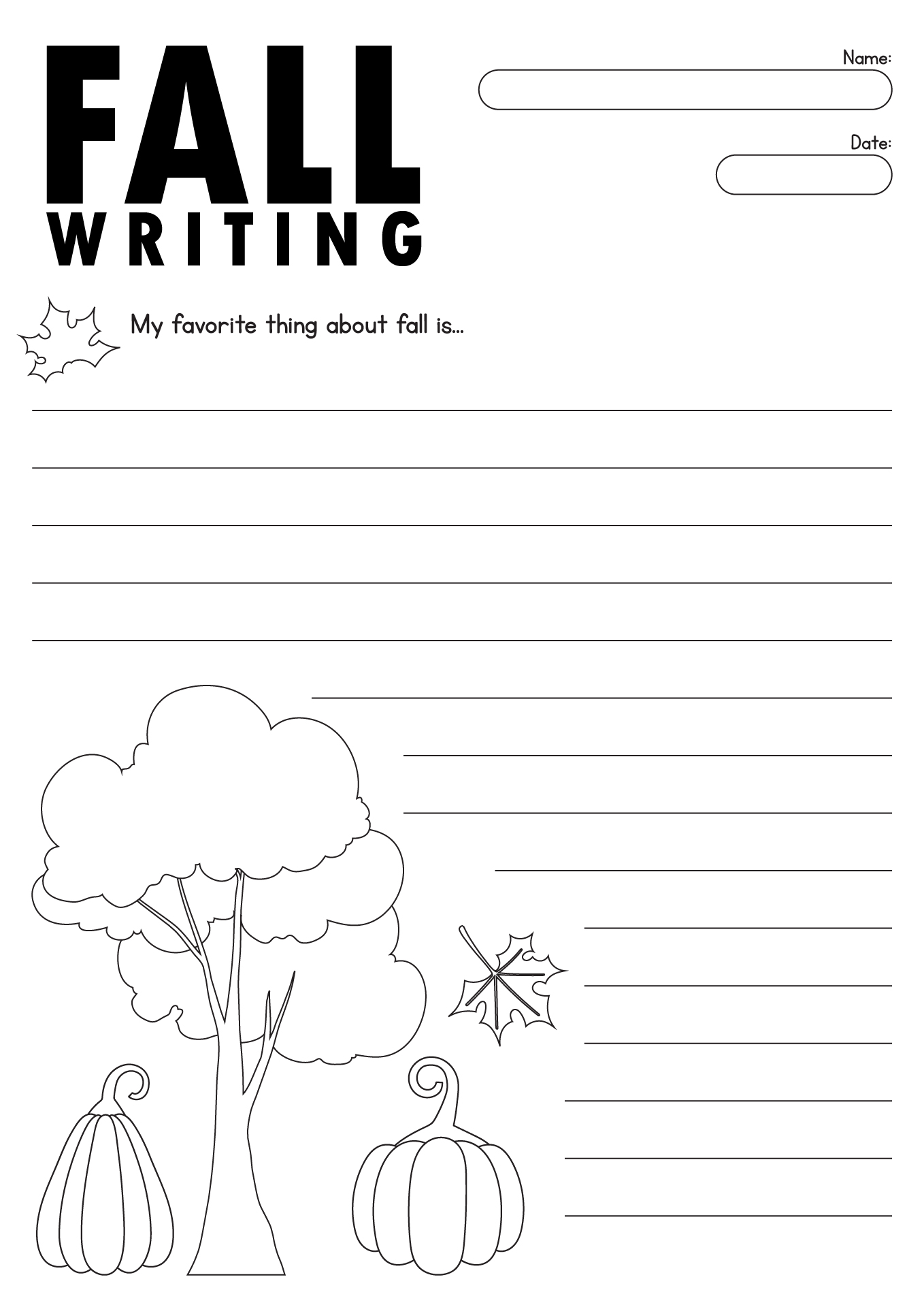
 Kindergarten Fall Writing

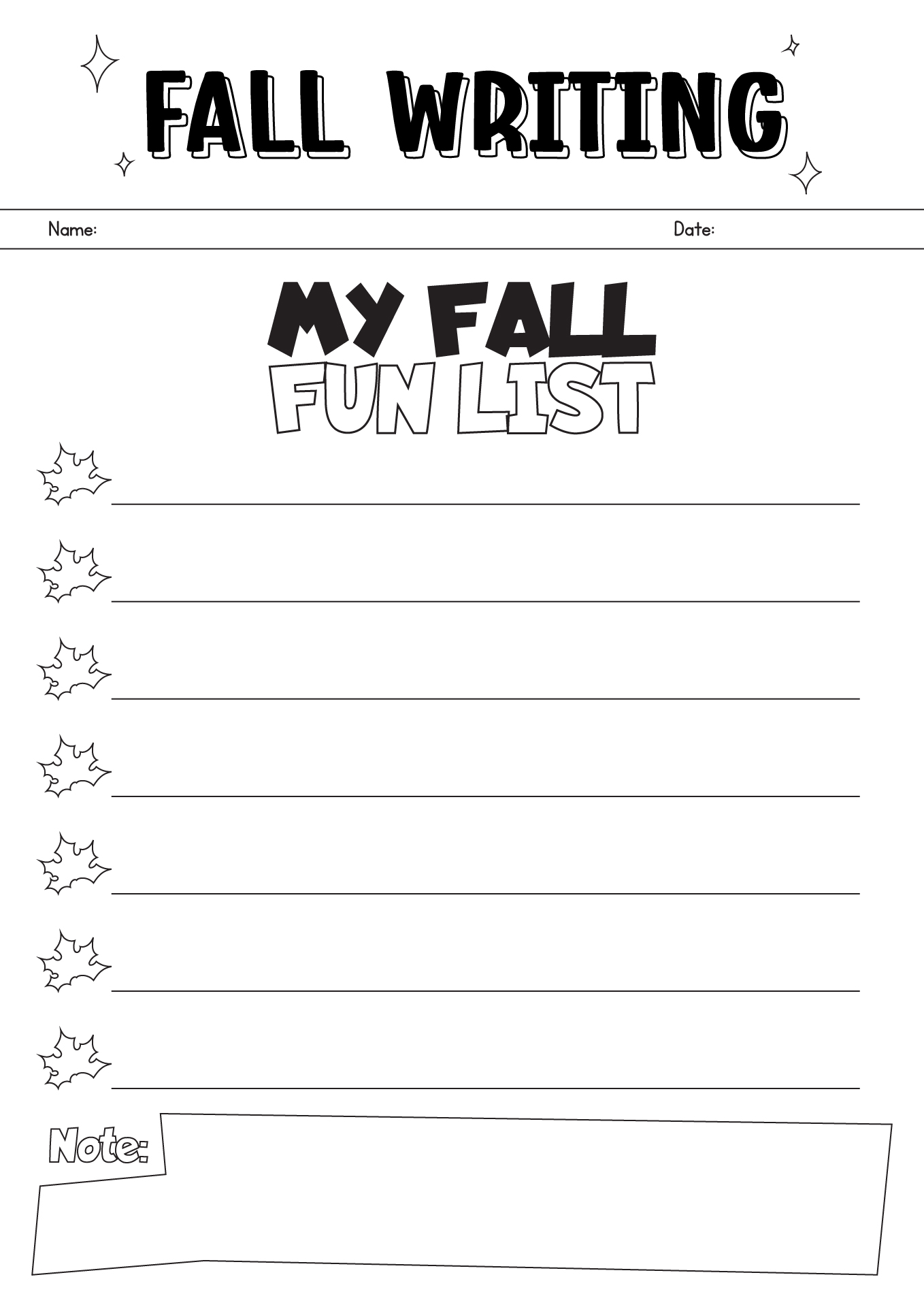
 Fall Writing First Grade


 Printable Fall Worksheets

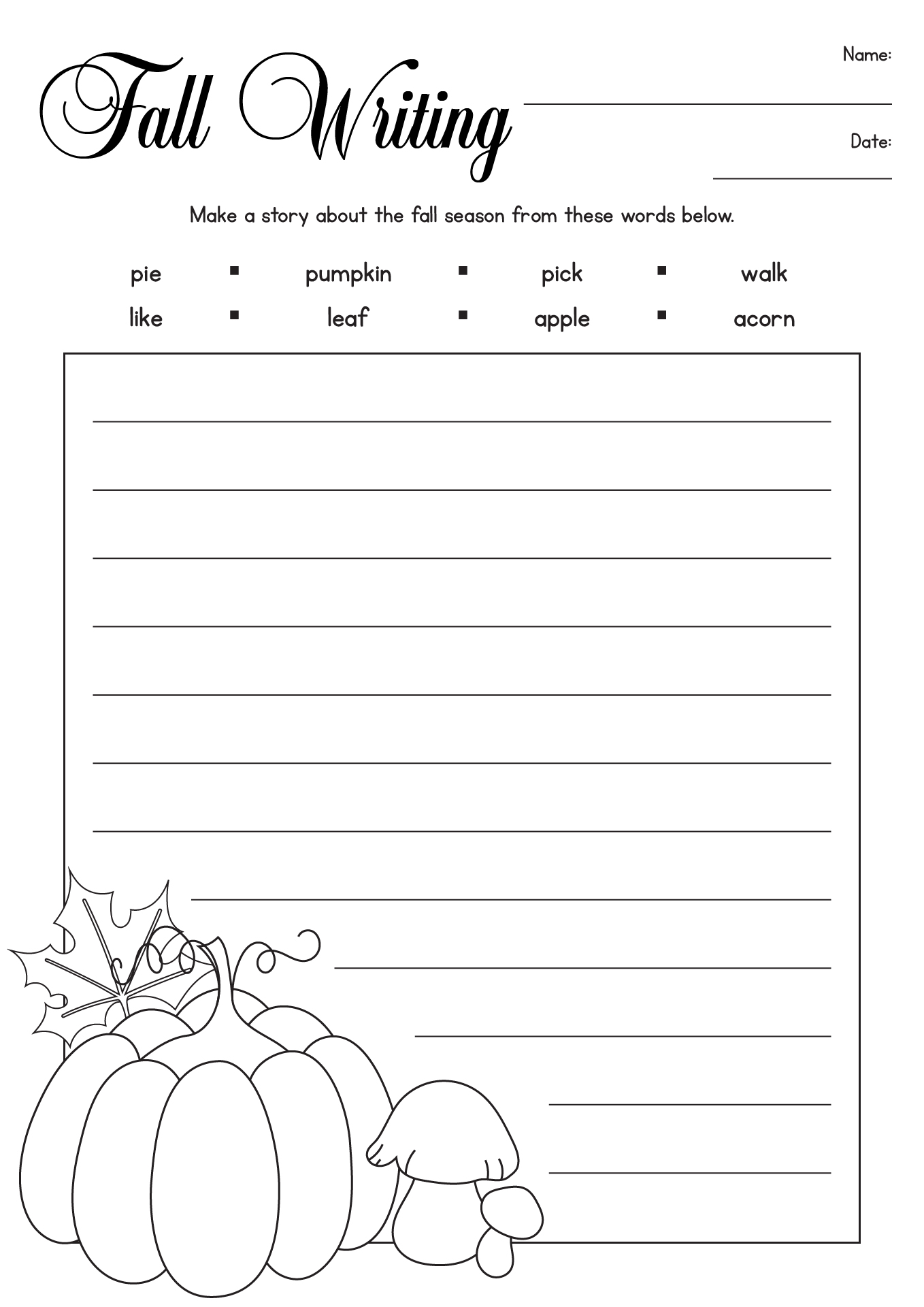
 Kindergarten Fall Writing

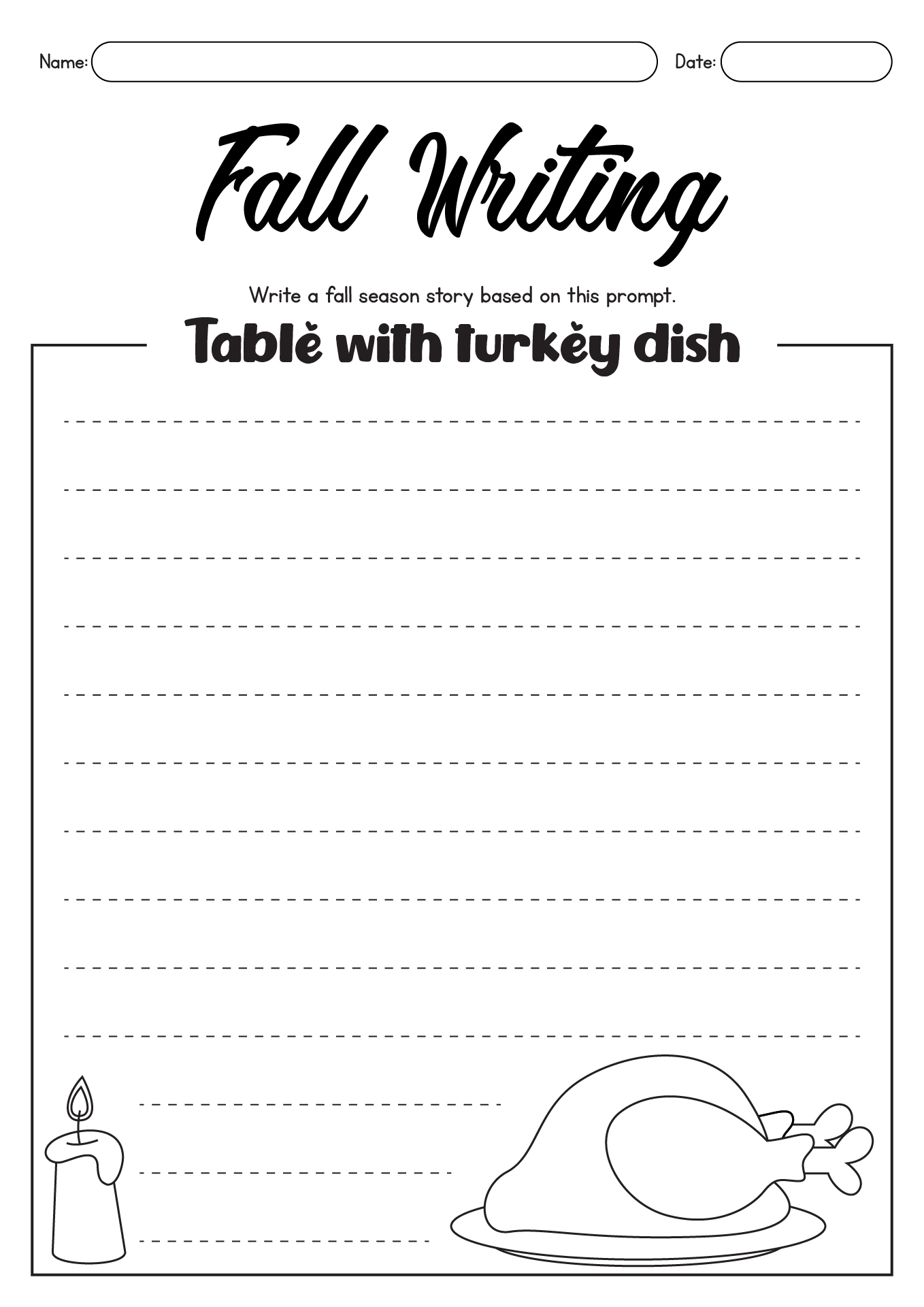
 Fall Writing Prompts

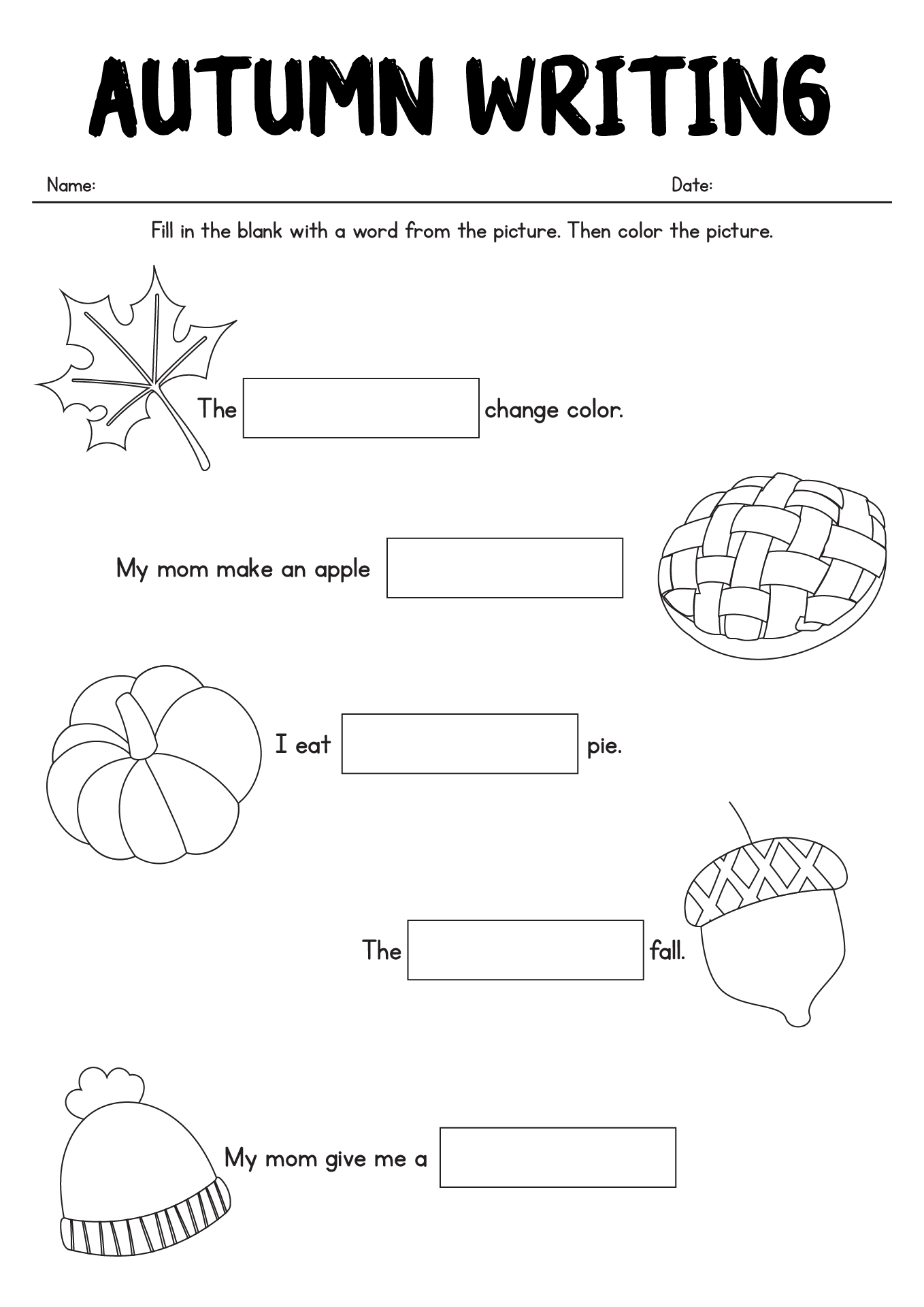
 Autumn Worksheets Writing

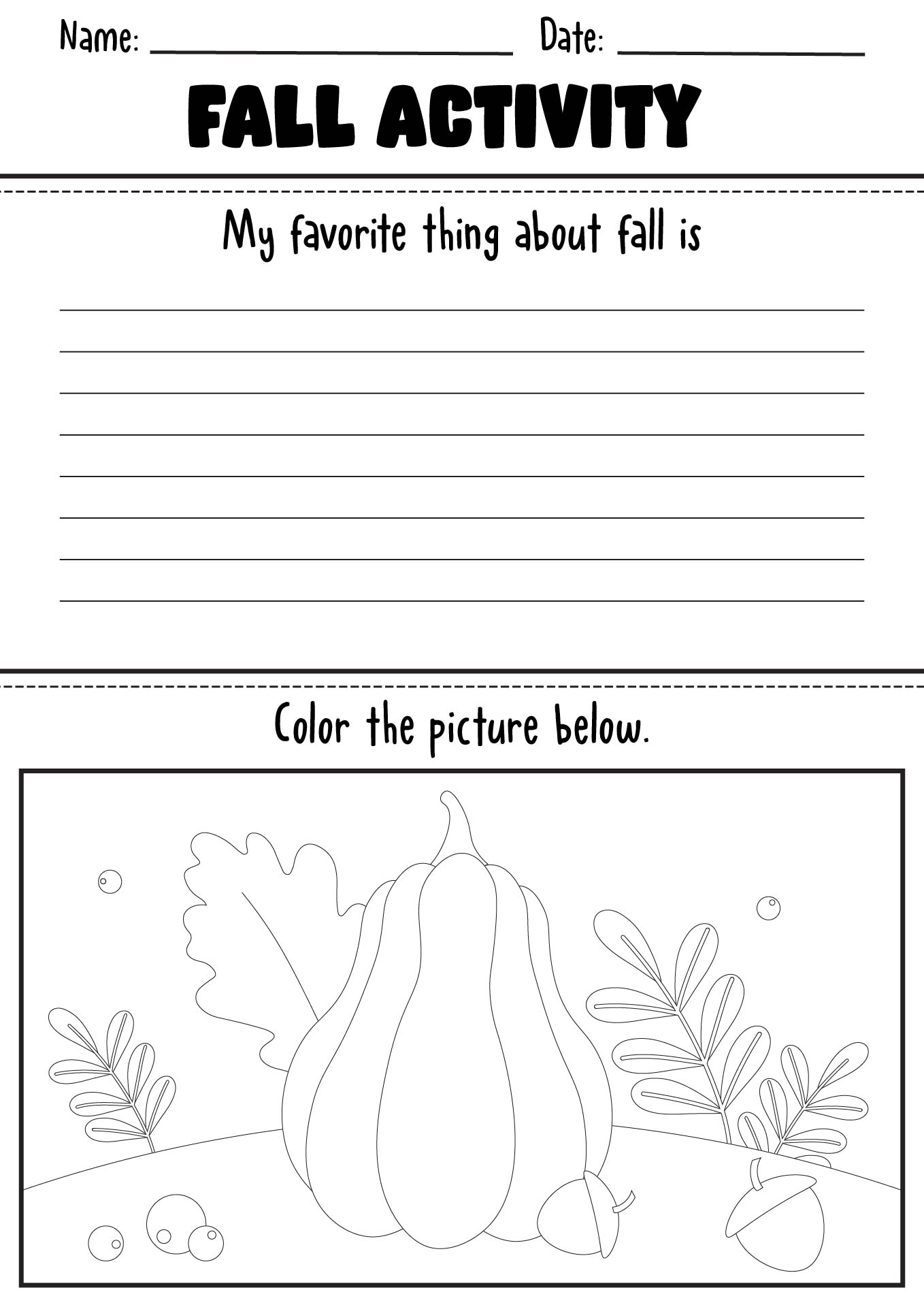
 Fall Activities First Grade Writing

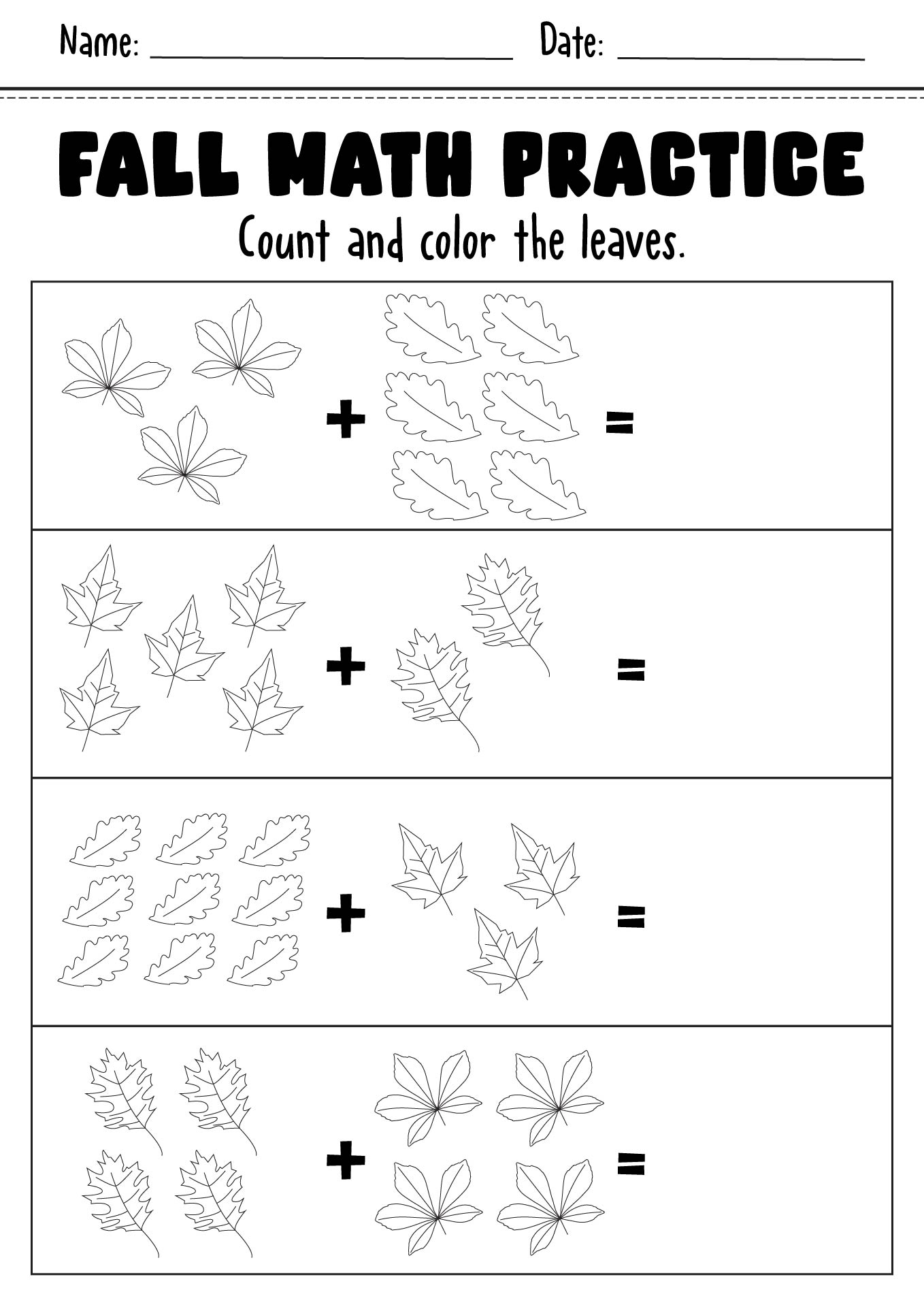
 Leaves Worksheets Activities

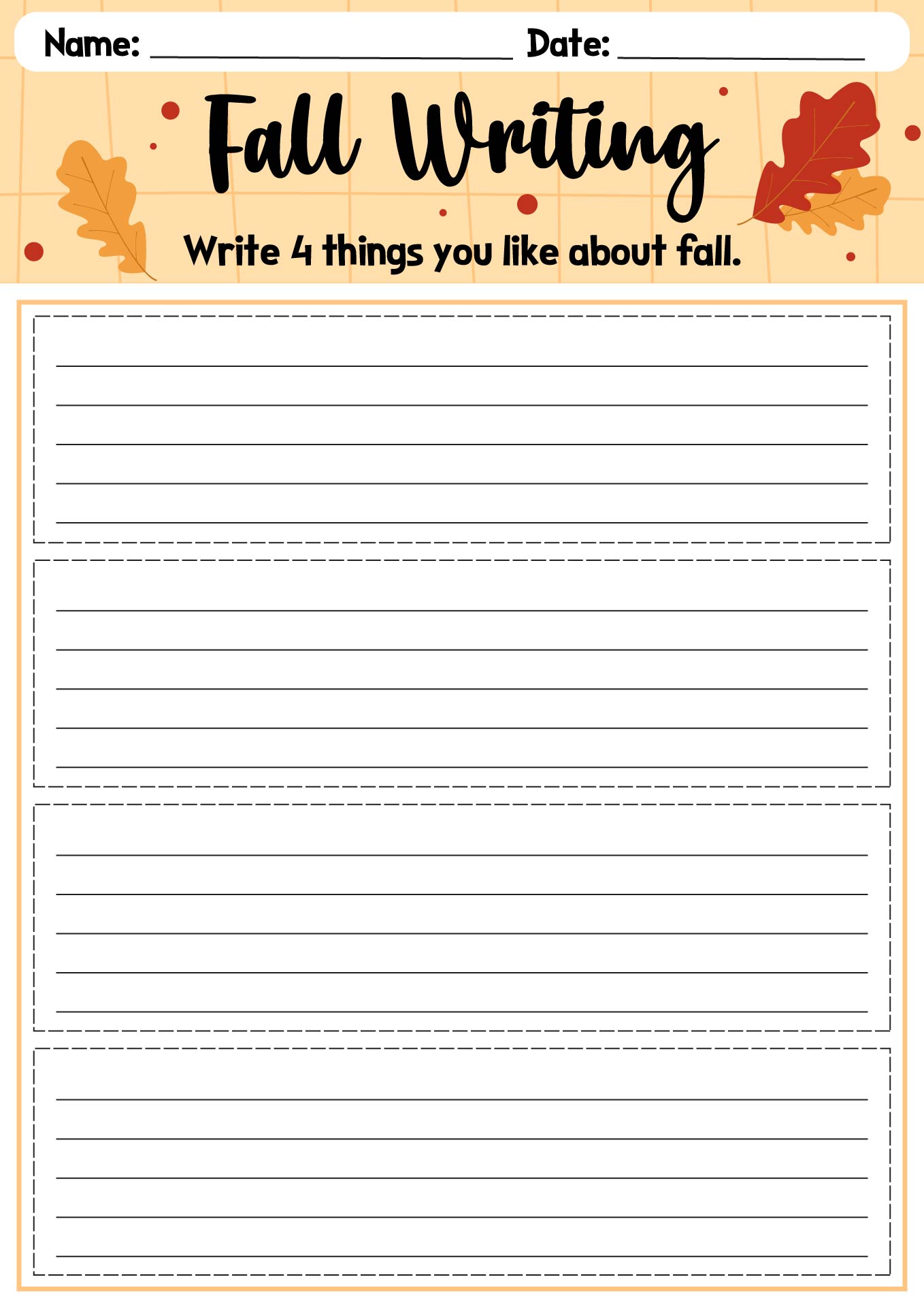
 Fall Activities First Grade Writing

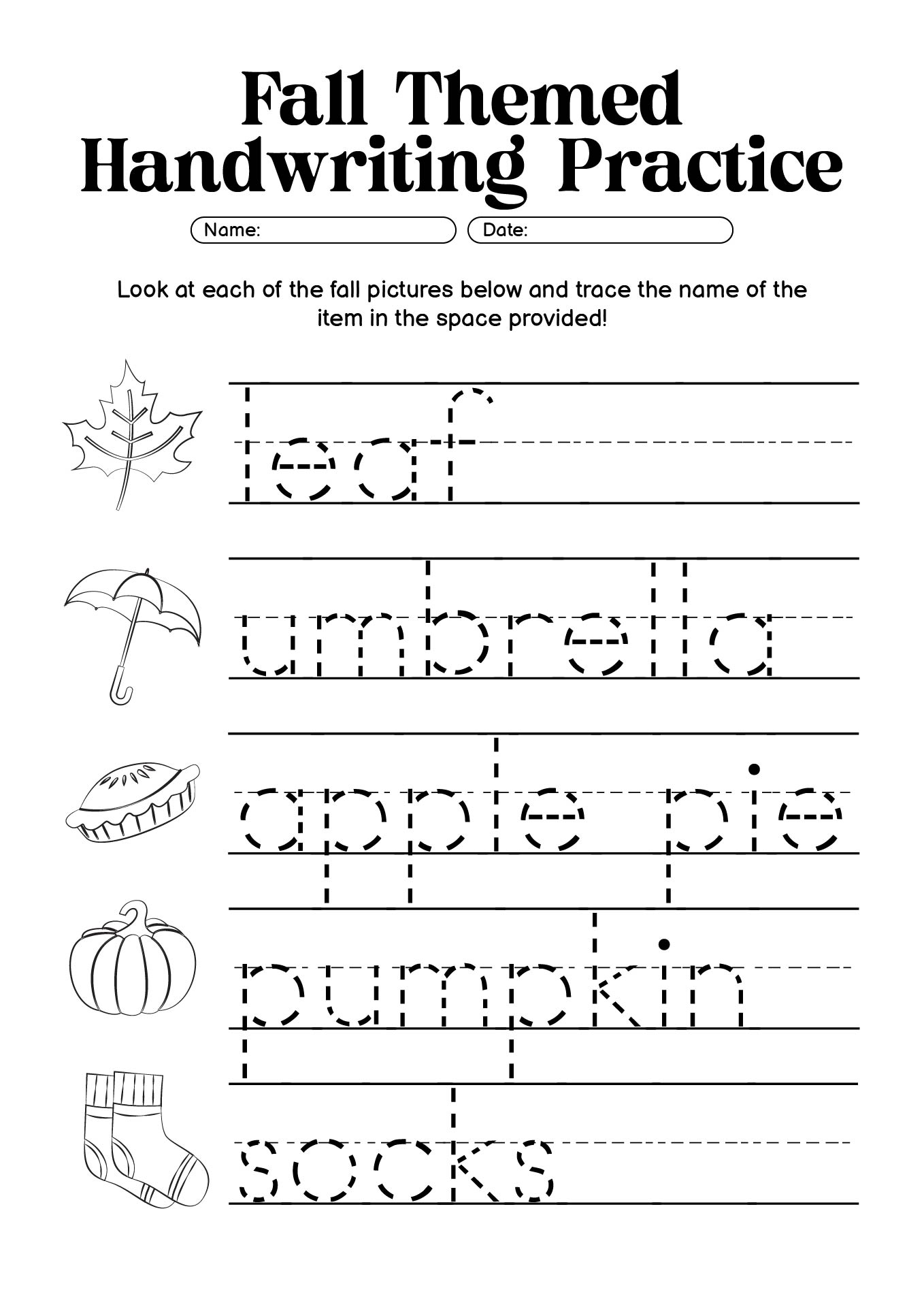
 Fall Themed Handwriting Practice Sheets

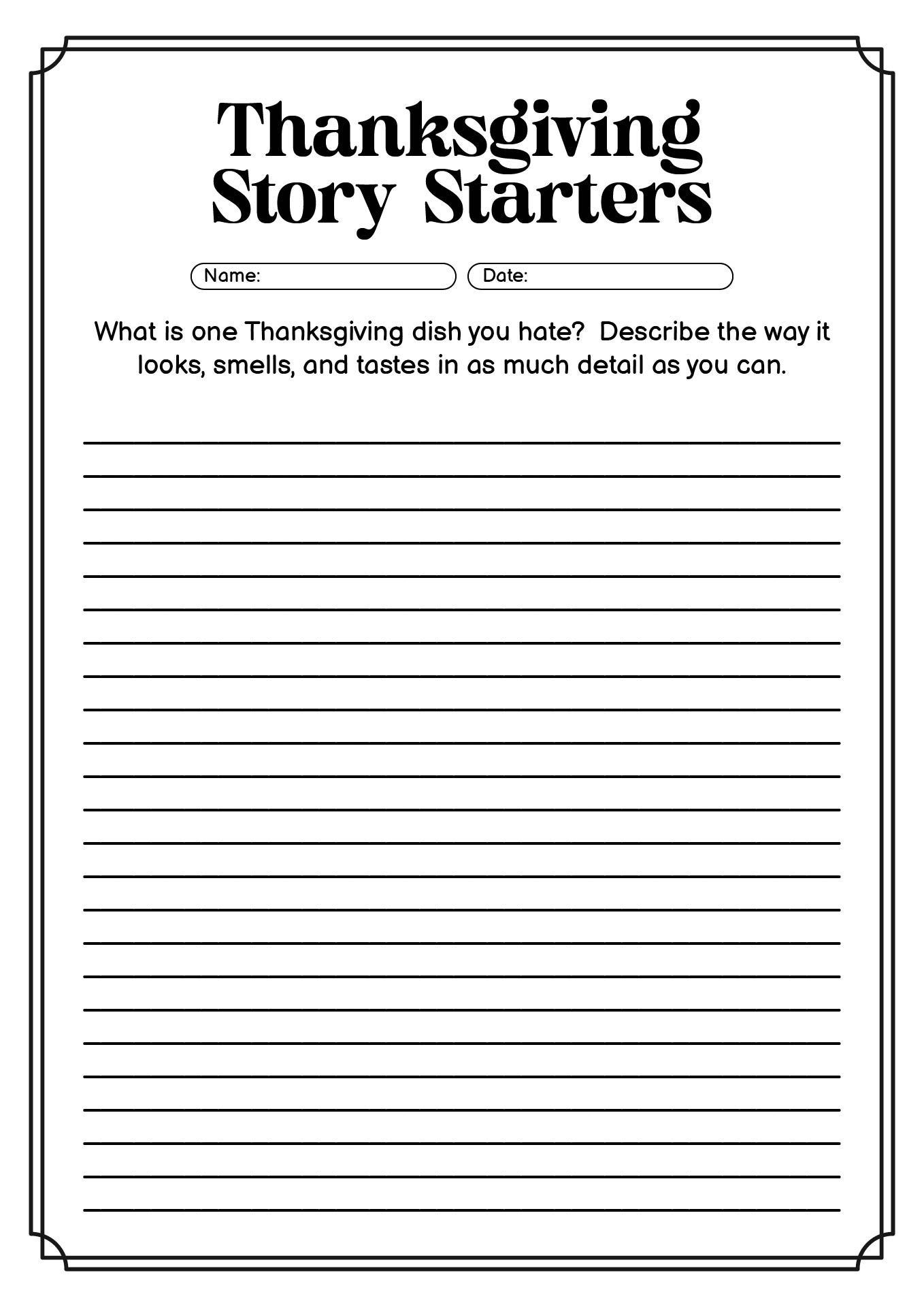
 Thanksgiving Story Starters Worksheets

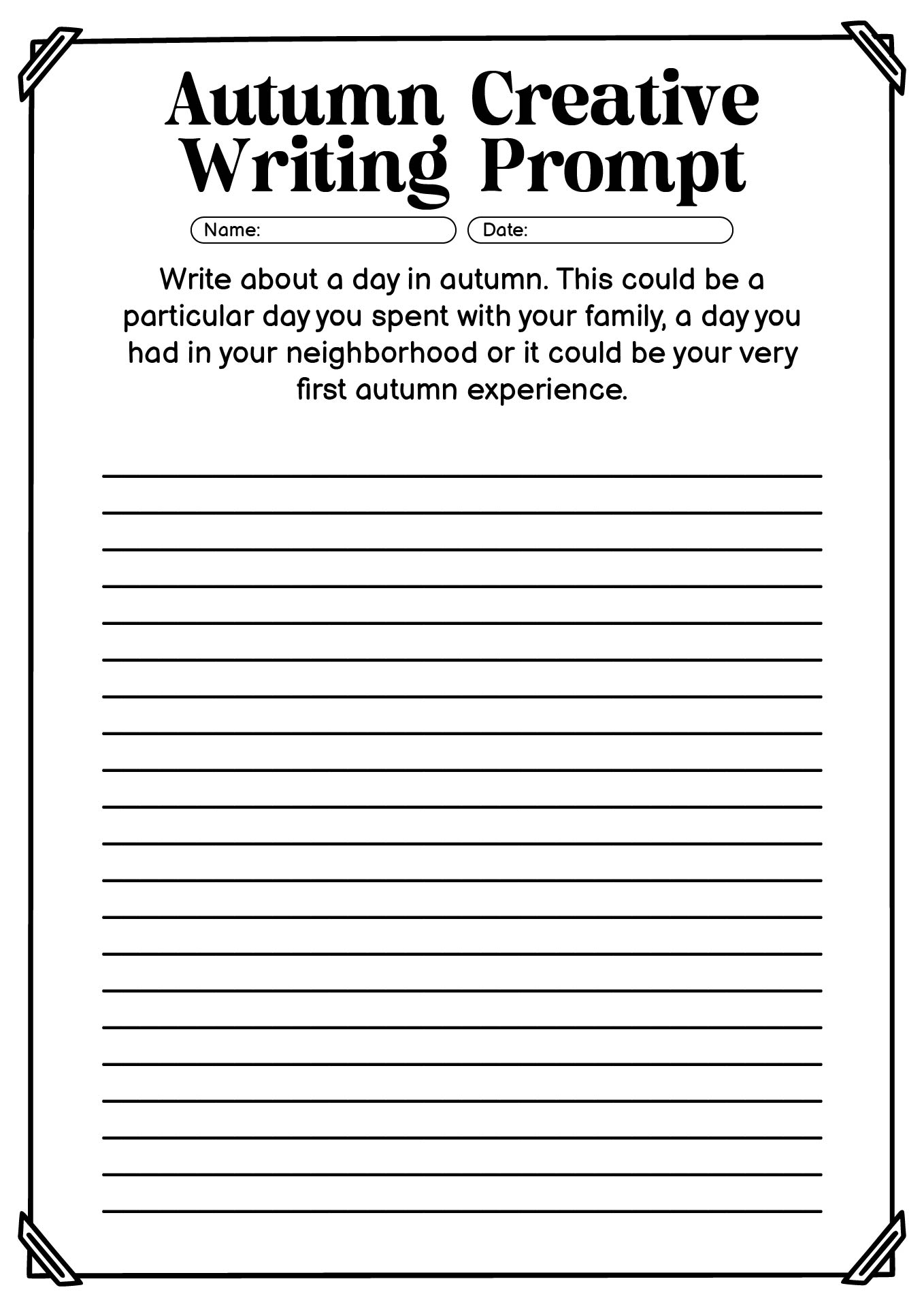
 Autumn Creative Writing Prompts

More Worksheets
What Writing Challenges Are Waiting Inside These Fall Writing Worksheets?
Here are some exercises children can discover:
- Fall Vocabulary Writing: Children practice writing seasonal words such as acorn, harvest, sweater, and scarecrow. They can also use these words to create their own sentences.
- Sentence Completion: These exercises provide unfinished sentences that children need to complete using their own ideas. For example, "My favorite thing about autumn is..." gives them room to express personal preferences.
- Creative Storytelling: Children receive a fall-themed writing prompt and develop it into a short story. A prompt about a pumpkin that suddenly starts talking is a fun way to get their imagination moving.
- Descriptive Paragraphs: Older children can practice combining adjectives, sensory details, and complete sentences to describe an autumn afternoon or their favorite fall activity.
What Is the Recommended Age for Children Using Fall Writing Worksheets?
Generally, our Fall Writing Worksheets are suitable for children around 4-10 years old, depending on the exercise and their current abilities.
Here's a simple age-based guide:
- Ages 4-5 (Preschool): Choose activities involving letter tracing, copying short seasonal words, matching pictures with vocabulary, or filling in simple blanks. These exercises introduce the relationship between spoken and written words.
- Ages 6-7 (Early Elementary): Children in this group can begin writing complete sentences, describing familiar objects, and answering straightforward questions about autumn. Picture-based prompts are particularly helpful because they provide visual inspiration.
- Ages 8-10 (Upper Elementary): Introduce longer writing challenges, including short stories, descriptive paragraphs, personal reflections, and imaginative responses to open-ended questions.
What about teenagers and adults? They can also use selected activities for creative journaling, vocabulary practice, or seasonal writing warm-ups. The trick is to choose exercises that offer enough room for their current writing abilities.
How Do You Help Kids Find the Right Exercises in Fall Writing Worksheets?
Ask What They Enjoy Writing About
Start with familiar subjects. Do they like animals, seasonal celebrations, nature, or imaginary characters? A child who loves squirrels might enjoy creating a story about an adventurous woodland animal, while someone interested in Halloween might prefer writing about costumes and pumpkins.
Let Them Choose Between Different Writing Formats
Show children two or three exercise types and briefly explain what each one involves. For example:
- Picture description for children who enjoy observing illustrations.
- Sentence completion for those who prefer short and guided tasks.
- Storytelling prompts for imaginative thinkers.
- Vocabulary exercises for children who enjoy learning new words.
Consider How Much Guidance They Need
Some children enjoy having a clear sentence starter, while others prefer an open-ended prompt. Observe how they respond to each format. If they spend too much time wondering what to write, a more guided exercise is probably a better starting point.
Give Them Room to Change Their Minds
A child who chooses a descriptive writing activity today might prefer storytelling tomorrow. There's no reason to stick with one format throughout the entire practice session. Letting them switch exercises keeps the experience flexible.
How Can Beginners Get Started with Fall Writing Worksheets?
Step 1: Start with Familiar Fall Vocabulary
Before asking children to write sentences, introduce a few seasonal words. Show them pictures of pumpkins, leaves, apples, and squirrels. Say each word aloud and let them repeat it.
You can then ask simple questions such as:
- What color is the pumpkin?
- What do squirrels collect?
- What happens to leaves during autumn?
Step 2: Practice Copying Short Words
Choose three to five words from the vocabulary list and ask children to copy them onto paper. Keep the words manageable, especially for those who are still developing their handwriting skills.
Step 3: Move on to Sentence Starters
Once children recognize the vocabulary, introduce incomplete sentences such as:
- I found a yellow...
- My favorite fall activity is...
- The squirrel likes to eat...
Let them complete each sentence using words they already know. You can provide spelling assistance when necessary.
Step 4: Use Pictures to Build Ideas
Give children an illustrated writing prompt and ask them to identify three things they can see. Help them turn each observation into a simple sentence. For example, a picture of a pumpkin patch might inspire sentences about orange pumpkins, green vines, and farmers collecting their harvest.
Step 5: Encourage Independent Writing
After practicing shorter exercises, invite children to write two or three sentences without relying on sentence starters. They can describe a favorite autumn memory or invent a tiny story about a character they like.
Step 6: Review Their Work Together
Read their writing aloud and discuss what they have created. Instead of immediately correcting every spelling or grammar mistake, acknowledge the ideas they managed to express. Choose one or two areas to improve during the next practice session.
Ready to Turn Falling Leaves into Wonderful Stories with Our Fall Writing Worksheets?
You don't need to spend hours preparing writing materials from scratch. Our Free Printable Fall Writing Worksheets offer convenient activities that parents, teachers, and independent learners can explore whenever they need a little seasonal inspiration.
So, which autumn-inspired idea will your little writers bring to life first? Scroll up, choose your favorite designs, and download our free Fall Writing Worksheets to give those budding writing skills a fun seasonal adventure!
The fall season or autumn is elementary education for children. This season has some unique characteristics. That makes many people love the fall season so much. If teachers or parents want to teach children about fall, our Fall Writing Worksheets can be the best grade-level-appropriate learning tool.
These worksheets are printable resources that can help children understand fall concepts and seasonal activities. So, use these worksheets now and let children explore the fall season!


Have something to share?
Popular Categories
Who is Worksheeto?
At Worksheeto, we are committed to delivering an extensive and varied portfolio of superior quality worksheets, designed to address the educational demands of students, educators, and parents.

Comments